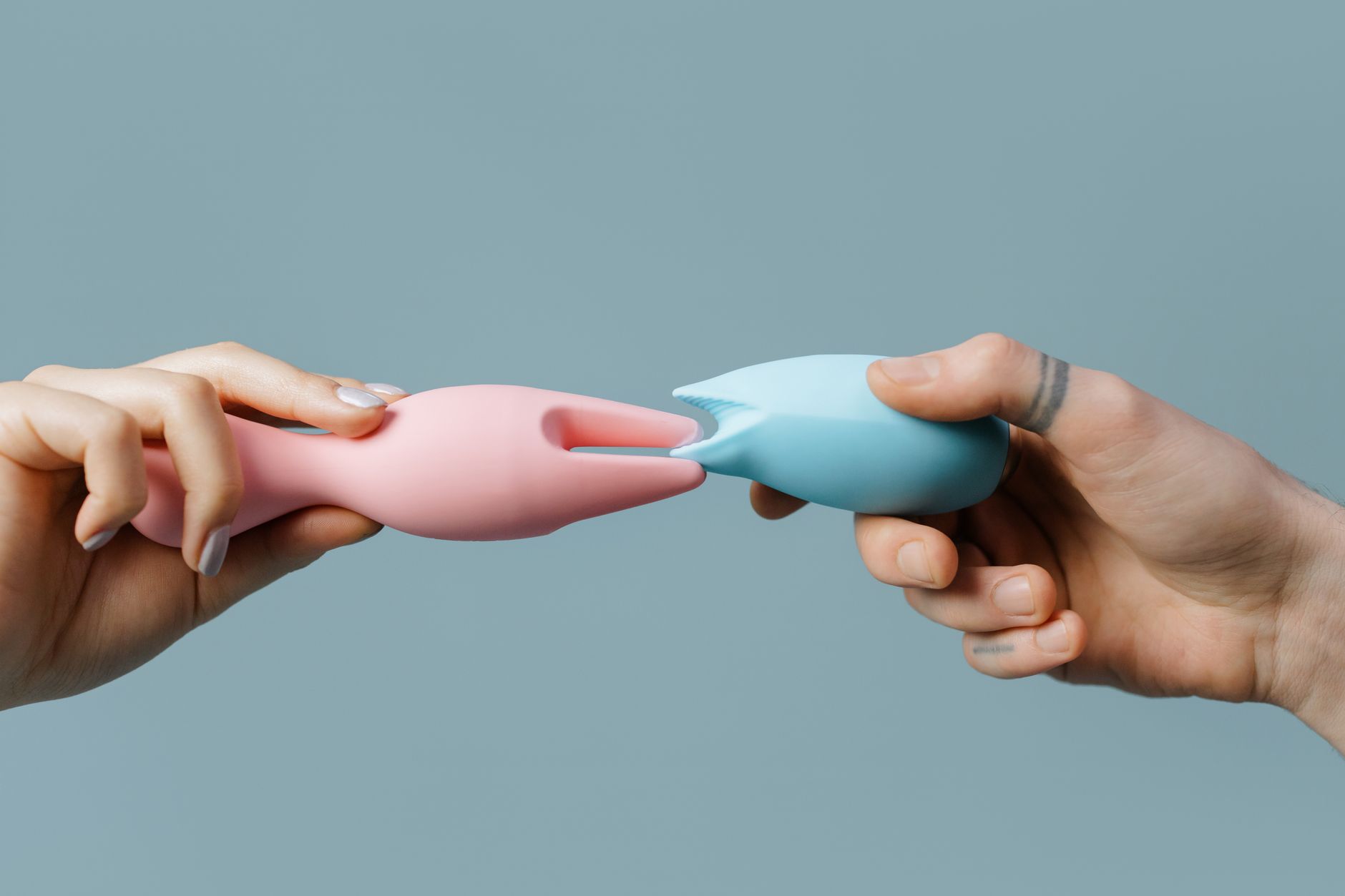
How to Use a Lemon Vibrator When You Want Stronger Orgasms With a Partner
Here's what nobody says out loud
You want to come harder. Your partner wants that for you too. And yet the thought of introducing a lemon clitoral vibrator into your sex life feels like it carries this weight, like you're admitting something is broken or that they're not enough. They feel it too, even if they haven't said it. That's the real problem to solve first.
I work with couples all the time where one person desperately wants to use a toy and the other is secretly worried it means they're failing. Here's the thing: toys don't replace partners. They amplify what's already there. A lemon vibrator doesn't change your desire for your partner. It changes your nervous system's ability to reach deeper pleasure. Those are completely different conversations.
The actual science of why this works
Your clitoris has about 8,000 nerve endings. A partner's fingers, mouth, or penis can stimulate maybe 10 percent of them at once. A lemon sucker or air-pulse vibrator reaches way more of that nerve density because of the pattern, rhythm, and sustained pressure it delivers. It's not better. It's different. More comprehensive.
When you add a partner's attention to that, your nervous system gets a kind of stacking effect. You're receiving stimulation on multiple pleasure pathways simultaneously. Your partner is still there, still connected, still present. The vibrator just opens a channel they couldn't physically open alone.
Here's where couples get stuck: they think toys are a solo thing. They're not. Not by default. A lemon clitoral vibrator in partnered sex is a shared device now. It belongs to both of you.
Before you buy: the conversation that changes everything
Don't surprise your partner with a vibrator on the nightstand. I know it feels easier than talking about it first, but you're cutting them out of the decision. That breeds resentment, even if they don't consciously know why.
Instead, pick a low-stakes moment. Not during sex, not when you're fighting, not right before bed when you're both tired. Maybe over coffee on a Sunday. Say something like: "I've been thinking about trying a vibrator during sex. I want stronger orgasms, and I've read that clitoral vibrators can help. I want to explore that with you."
Then stop talking. Let them respond. They might say yes immediately. They might ask questions. They might say they're nervous. All of those are fine. What matters is they had a say.
If they're hesitant, ask what they're worried about specifically. "I'm afraid you won't need me anymore" is a very different concern than "Vibrators seem loud and distracting." Once you know what they're actually worried about, you can address it. You can't fix vague anxiety.
Timing: when and how to introduce it during sex
Most couples bring the vibrator in during foreplay, before penetration. Here's why: you're already touching, already communicating, already taking breaks and switching things up. Adding a toy feels like a natural next step instead of a left turn.
Here's the practical rhythm that works for most couples:
One of you starts with hands and mouth like usual. Build arousal for 10 to 15 minutes. Then introduce the lemon vibrator at about mid-arousal, not at the peak. Your partner can hold it, or you can. Honestly, I recommend your partner holds it at first. It keeps them in control of the pace and pressure. It also keeps them engaged instead of sitting back watching.
If penetration is part of your sex life, the vibrator stays external. Your partner enters you slowly once you're very aroused. The lemon vibrator stays on your clitoris the whole time. Your partner doesn't need to thrust hard or fast. They can move slowly and let the vibrator do the intensity work.
This changes the dynamic completely. Slower penetration + external vibrator = deeper pleasure without battering your clitoris. It feels less intense in a frantic way and more intense in a grounded way.
Positions that actually work
Not every position plays well with toys. Here's what I tell couples:
If you're comfortable with your partner on top, missionary works fine. They can use one hand to hold the vibrator against your clitoris while they move inside you. It requires a little coordination, but after one or two tries, it becomes muscle memory.
Side-by-side positions are honestly better for toy use. You're both relaxed, both at similar heights, less effort required. Your partner can use the vibrator, reach your clitoris easily, and move at whatever pace feels good without exhaustion setting in.
If you prefer being on top, you have the most control here. You can hold the vibrator yourself or your partner can. You dictate the depth and speed of penetration while your partner focuses on the external stimulation. Some people find this less intimate. Some people find it more intimate because there's less pressure to perform a certain way.
Don't overcomplicate it on the first try. Pick one position you already know you like. Add the vibrator. See what happens.
The sensitivity conversation (the thing most couples skip)
Clitoral sensitivity changes during arousal. It also changes during your cycle, during stress, with alcohol, with medication. When you're using a vibrator with a partner, you're adding variables. Your sensitivity might be different than usual.
Before you start, agree on a signal system. Not a traffic light (that's exhausting), just something simple. "If I say slow down or say softer, you drop the intensity but keep going." You might need to adjust multiple times in one session. That's not failure. That's normal.
Your partner needs to feel okay making those adjustments without worrying they did something wrong. You need to feel okay asking for them without killing the mood. Practice saying it casually during sex, the same way you'd ask them to move left or right. It's just a navigation tool.
Why the first time will probably feel awkward (and that's fine)
There's a learning curve. The vibrator might be louder than your partner expected. The positioning might feel clunky. One of you might tense up worrying whether it's working. All of this is completely normal and completely temporary.
I always tell couples: give it three tries before you decide if this works for you. The first try is about logistics and comfort. The second try is about finding your rhythm. By the third try, your nervous system starts to relax and actually receive pleasure.
If after three solid attempts it still doesn't click, that's okay too. Toys aren't for everyone. Some couples do amazing things without them. But most couples I work with find that once they get through the awkward setup phase, the pleasure part becomes really solid.
After the vibrator is part of your routine
Toys don't have to be in every session. Some couples use them once a week. Some couples use them when they know they want a guaranteed orgasm. Some couples use them when they have limited time and want quality over quantity.
What changes is the conversation. Instead of worrying whether it's okay to ask for a vibrator, you just say "Want to use the lemon vibrator tonight?" Like you're asking whether to put on music or light a candle. It becomes a normal part of your pleasure toolkit.
The deeper shift is this: using a vibrator together is actually a form of intimacy. It means you're trusting your partner with your body's full capacity for pleasure. It means they're willing to prioritize your orgasm over ego. It means you're communicating about what feels good and what doesn't. That's what real partnership looks like.
FAQ: What couples actually want to know
Will my partner feel like they're not enough if I use a vibrator?
Not if you frame it right. A vibrator isn't a replacement for your partner. It's an amplifier. Think of it like this: your partner can give you a massage, but a massage gun doesn't make their massage pointless. It just accesses different muscles. Same thing here. Your partner is still the person you're choosing to be with, still the person creating the experience. The vibrator is just one tool in that experience.
What if my partner is turned on by the vibrator too?
Many partners are. That's not weird or wrong. It can actually make sex hotter for both of you. Some partners enjoy watching. Some enjoy using it on you. Some enjoy knowing they're helping you reach a stronger orgasm. If your partner finds it arousing, that's a green light, not a problem.
Can we use a lemon vibrator if we don't do penetration?
Absolutely. If you have sex that's oral, manual, or just external stimulation, a lemon clitoral vibrator fits right in. Your partner can use it on you, you can use it yourself with them present, or you can take turns. There's no rule that says vibrators are only for penetrative sex.
How do I bring this up if my partner has always been against toys?
Start with curiosity instead of advocacy. "I read something about why clitoral vibrators can help some people reach stronger orgasms. Have you ever thought about trying one?" Give them space to say no. But also give them new information they might not have had. Sometimes the resistance is just fear of the unknown, and new information shifts that.
What if my partner wants to use a vibrator on themselves while I watch?
That's not a substitute for partnered sex. That's a different thing, and it's worth checking in about whether you're both feeling connected to each other. But if it's something you both enjoy as part of your sex life, it's fine. Just make sure you're not using toys as a way to avoid actually being together.
Does using a vibrator during sex mean our sex life isn't working?
No. It means you're both interested in deepening pleasure. That's the opposite of a problem. Most couples who introduce toys report feeling more connected afterward, not less. You've had a vulnerable conversation. You've experimented together. You've discovered something new that works for both of you. That's intimacy.
What this is really about
Using a lemon vibrator with your partner isn't about the toy. It's about being willing to talk about pleasure without shame, to try new things without ego, and to prioritize satisfaction for both of you. It's about trusting your partner enough to say what you actually want. And it's about your partner being willing to listen and show up for that.
That's the foundation of good sex at any age or stage of a relationship. The vibrator is just the vehicle.
Ready to explore? Start the conversation. If you're stuck on how to bring it up, reach out to us. We've got scripts and resources for exactly this.