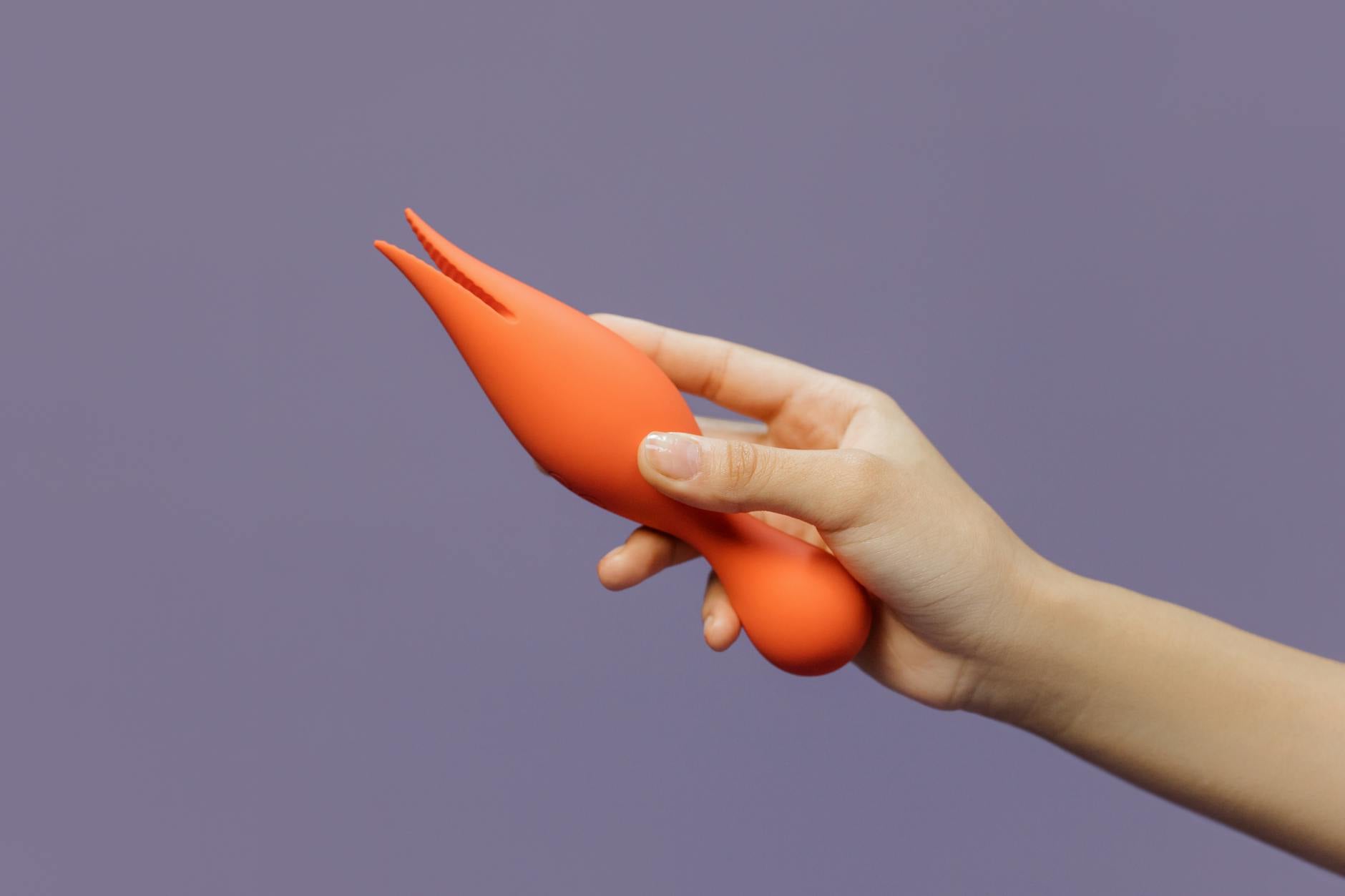
Let's talk about the orgasm after the orgasm
Here's the thing most people don't realize: your body can do way more than one. The question isn't whether you're capable of multiple orgasms. The question is whether you know how to pace yourself, recover between peaks, and use a tool like the Lemon Vibrator strategically to get there. That's a learned skill, not a superpower.
I've worked with hundreds of people who assumed they'd hit their limit and stopped trying. Wrong. They just didn't know the rhythm.
How your body actually resets between orgasms
After you come, two things happen: your nervous system floods with oxytocin and endorphins (the good stuff), and your genital tissue desensitizes temporarily. This desensitization isn't permanent. It's a refractory period, and it lasts anywhere from 30 seconds to a few minutes depending on your body, your age, your hydration, and whether you're mentally still engaged.
The mistake most people make is stopping completely once they orgasm. Rest, sure. But don't disengage. Keep your hand on yourself, keep the vibe nearby, stay in your body. The moment you mentally check out, your nervous system follows.
With the right lemon clitoral vibrator and a little strategy, people often find they can bypass the hardest part of that refractory period entirely. Gentle, lower-intensity stimulation during recovery keeps arousal high while tissue sensitivity resets. Then intensity ramps back up.
The intensity pyramid approach
Think of a session designed for multiple orgasms as a pyramid, not a straight line. You're not staying at max intensity the whole time.
First orgasm (the warmup). Take your time here. Spend 10-15 minutes building arousal. Use patterns 1-3 on your Lemon if you have one. This first peak doesn't need to be earth-shattering. It primes everything else that comes after. Your body is getting the signal: we're going long today.
Second orgasm (the momentum phase). This comes faster because you're already warmed up. Use patterns 2-4. Let arousal build for 5-7 minutes. During your refractory period, drop down to pattern 1 or 2 for 60-90 seconds. Keep contact with your body. This is the hardest part mentally because you want to either stop or push to the next peak. Don't. Sit with the low hum.
Third orgasm onward (the flow state). By now your body has found its rhythm. You're oscillating between intensity levels on purpose, not randomly. The refractory periods get shorter. You might use patterns 3-5 for 4-5 minutes, then drop back to 2 for 30 seconds, then climb again. Each peak is different. Some are full-body, some are localized. Some make you hold your breath, some make you gasp. That variety is normal and good.
The equipment piece most people overlook
Your lemon vibrator is only one tool. What matters more is access to anything that lets you manage arousal without friction fatigue. A lemon sexual toy like the Lem has variable patterns and speeds precisely for this reason. You can pulse, hold, oscillate, and rest without swapping devices mid-session.
But here's what I tell people: add a water-based lubricant. Even if you usually don't need it, extended sessions increase friction and heat. Lube keeps tissue happy, lets you session longer, and honestly makes the sensations feel different and often better across multiple peaks.
Mental stamina beats physical stamina every time
I've seen the same pattern across hundreds of clients: the limiting factor isn't your body. It's your brain telling you that multiple orgasms are weird or greedy or that you should be "done" after one. That's noise. Ignore it.
Here's what actually helps. Before you start, decide how long you want to play. 30 minutes? 45? Set a real timer. Tell yourself you're not aiming for a specific number of orgasms. You're just exploring what happens when you stay engaged for that block of time. Orgasms will happen as a side effect of that engagement.
Second, let go of the scoreboard mentality. You're not competing with yourself. Some sessions you'll have three peaks, some six, some two really intense ones. The goal is pleasure, not performance.
The physical prep that actually works
Four things you can do beforehand that genuinely shift what's possible:
Hydration. Your nervous system and your genital tissue both need water. Drink normally throughout the day, not a gallon right before. Dehydration kills arousal and shortens refractory periods. It's unsexy to say, but it's true.
Pelvic floor awareness. You don't need to Kegel. In fact, tight pelvic floor muscles work against multiple orgasms. Spend 5-10 minutes before you start doing the opposite: breathing into the pelvic floor and consciously relaxing it. Drop your sitting bones. Let tension go. A relaxed pelvic floor recovers faster between peaks.
Minimal caffeine. Caffeine isn't forbidden, but it increases heart rate and can shorten arousal windows. If you have sensitivity to it, skip it for 3-4 hours before a session.
Realistic expectations about timing. Extended pleasure sessions aren't for every day. They're energetically expensive. Plan them for times when you have actual space, mental clarity, and at least an hour. Rushing ruins the whole project.
When to back off (and it's not failure)
Some bodies plateau. After three or four orgasms, you hit a wall where arousal stops climbing the same way. This is normal. You haven't failed. Your nervous system is telling you that this particular session has a ceiling.
When that happens, you have three choices. One: stop and enjoy the three you had. Two: shift gears entirely. Stop using your lemon vibrator. Switch to hands, or a partner, or just rest in the afterglow. Three: try extending the session longer. Sometimes what feels like a plateau is just a deeper refractory period. Keep stimulation light and wait another minute.
The people who experience the most pleasure across multiple orgasms are the ones who don't treat plateaus like personal rejections. They just shift what they're doing.
Common setup mistakes and how to avoid them
Wrong location. You need somewhere comfortable where you can actually relax for 30-45 minutes. A bed works. A couch with good pillows works. A chair does not. Tension in your back or neck sends signals of danger to your nervous system, which directly blocks arousal buildup.
Wrong mindset about time. If you're looking at the clock or worried about being interrupted, stop. Cancel the session. Your nervous system is in threat mode, and that's incompatible with the vulnerability multiple orgasms require.
Too much intensity too early. Jumping straight to pattern 5 on your lemon clitoral vibrator because you want to "get there faster" is self-sabotage. You're actually extending refractory periods. Start slow. Arousal is not a race.
Not using enough lubrication. Extended stimulation with a suction vibrator like the Lem can feel dry and uncomfortable after 15-20 minutes. Reapply lube. It's not cheating. It's maintenance.
The conversation to have with partners (if relevant)
If you're doing this solo, none of this matters. But if a partner is in the room, have one sentence before you start: "I'm planning a longer session tonight. I might be loud. I'm okay. Just let me do my thing." That's it. You don't need permission. You're informing them so they're not confused or concerned.
If a partner is involved in the session itself, it's even simpler. "I want to explore multiple orgasms. Can you help me pace this? I'll tell you when to change speeds." Most partners find this wildly hot and want to be part of it.
FAQ: The questions people actually ask
How do I know if I'm having multiple orgasms or just contractions? Real orgasms have mental components: a moment where your brain kind of pauses, followed by waves of pleasure. Contractions without that mental component are your body's way of saying "almost, but not quite." Both feel good. Neither is wrong. But if you're chasing multiple real orgasms, you'll recognize the pattern pretty quickly.
Is it normal for the second one to feel less intense than the first? Completely normal. Early orgasms are often bigger because your whole system is fresh. Later ones are different, not worse. Some people report the third or fourth feels better because they've relaxed more.
How long should I actually rest between peaks? There's no magic number. Some people need 30 seconds, some need three minutes. Start with 60-90 seconds of gentle, low-pattern stimulation. If arousal keeps climbing, keep going. If it plateaus, you probably needed that break.
Can using a lemon sucker or air-pulse vibrator make multiple orgasms easier? Yes. The Lem works especially well here because suction doesn't create the same kind of friction fatigue as direct vibration. But any tool that lets you vary intensity without stopping works. It's about rhythm, not the specific toy.
What if I have a refractory period where nothing works? Stop for 5-10 minutes. Completely. Breathe, drink water, lie still. Sometimes your nervous system genuinely needs to reset. That's not failure. That's your body being smart.
Is it possible to have multiple orgasms if I usually don't orgasm easily? Yes, but it's a different strategy. If orgasms are rare for you, focus on extended arousal building (20-30 minutes) with your lemon vibrator rather than multiple peaks. You might have one really satisfying orgasm instead of three small ones. That's success.
The reset: how to come down gracefully
This is the part people skip and then feel weird. After an extended session, your nervous system is in a heightened state. You need a 10-15 minute wind-down. Dim the lights. Stop using your vibrator entirely. Put your hand on your heart or belly. Breathe slowly. Drink water. Maybe use a blanket. You're not being dramatic. You're helping your nervous system transition from high arousal back to your normal state.
Without this, some people feel weirdly empty or emotional afterward. That's normal. You've just experienced significant pleasure and vulnerability. Acknowledge it. Rest. The afterglow is part of the experience, not the end of it.
Multiple orgasms aren't a destination you arrive at once and master. They're something your body learns over time. Some sessions you'll get there easily. Some you won't. That's not a problem. It's information. Listen to it, adjust, and keep playing.